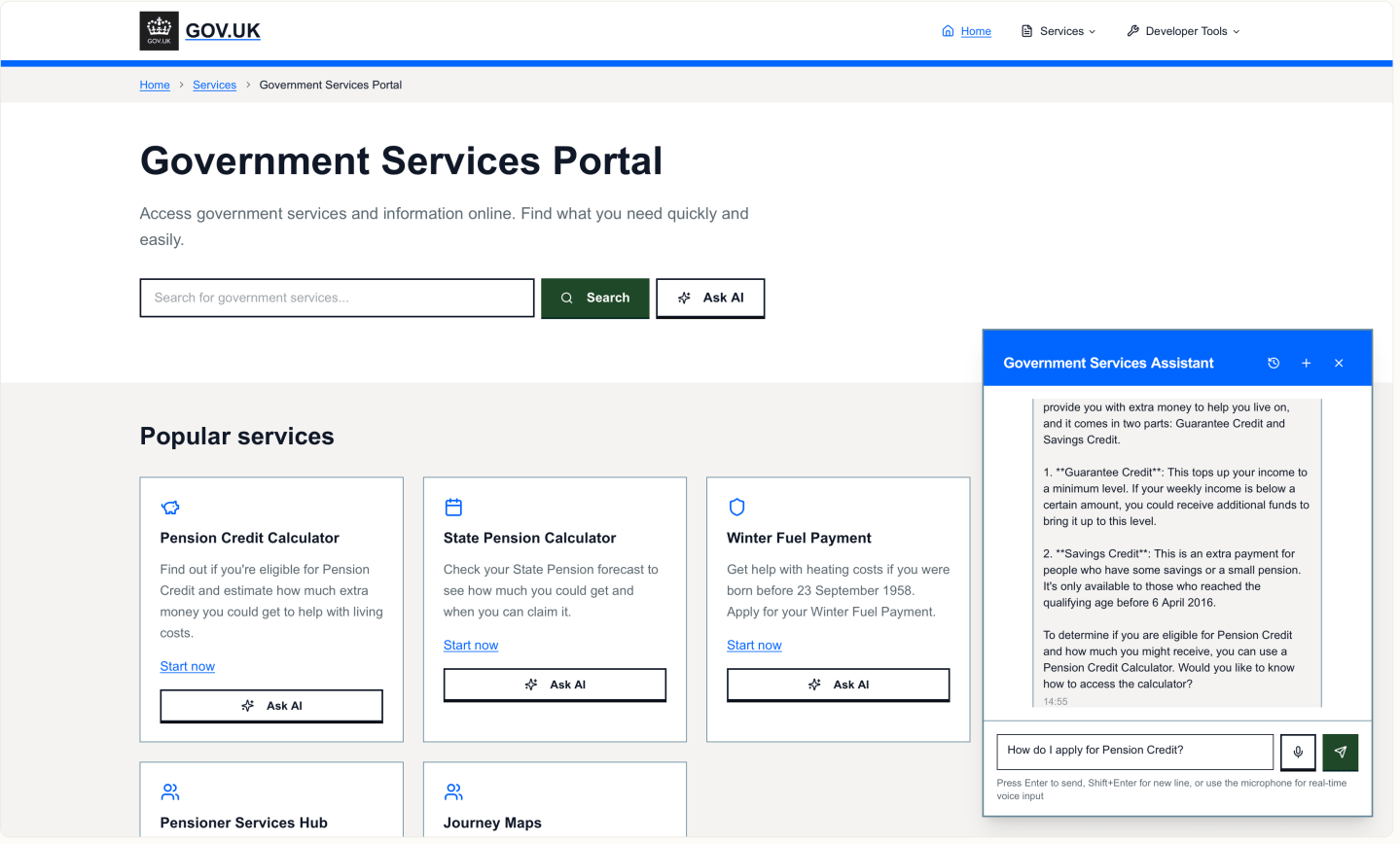
Building government websites and digital services today requires a shift from static pages to agentic services—platforms that don’t just provide information but actively help citizens complete tasks.
To achieve this, you need a Generative AI Platform designed for enterprise-grade governance and “agentic” capabilities.
The Recommended Platform: DesignGenie
DesignGenie is a comprehensive ecosystem designed for public sector organizations and high-compliance environments. It provides a “no-code to pro-code” environment specifically for building grounded, secure, and goal-oriented AI agents.
1. Building Services & Web Content
Instead of writing every page manually, you use DesignGenie to handle the heavy lifting:
- Content Generation: Use the platform’s AI engine to generate plain-English summaries of complex legislation or policy documents. This ensures accessibility (e.g., converting a 50-page tax law into a 5-bullet summary for citizens).
- Multilingual Support: Automatically translate content into dozens of languages with high contextual accuracy, which is essential for serving diverse populations.
- Structured Data Extraction: DesignGenie can ingest physical government forms and turn them into structured digital databases that feed your website’s content dynamically.
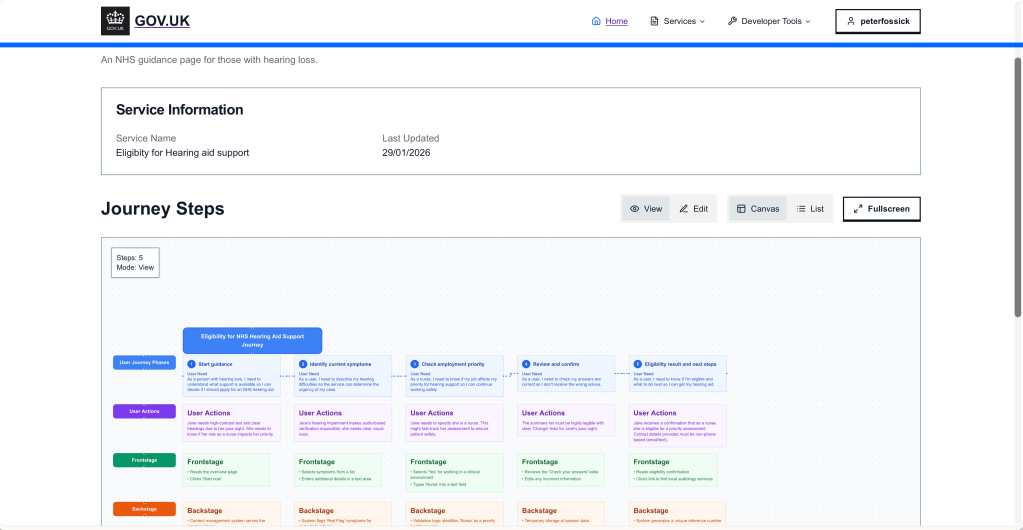
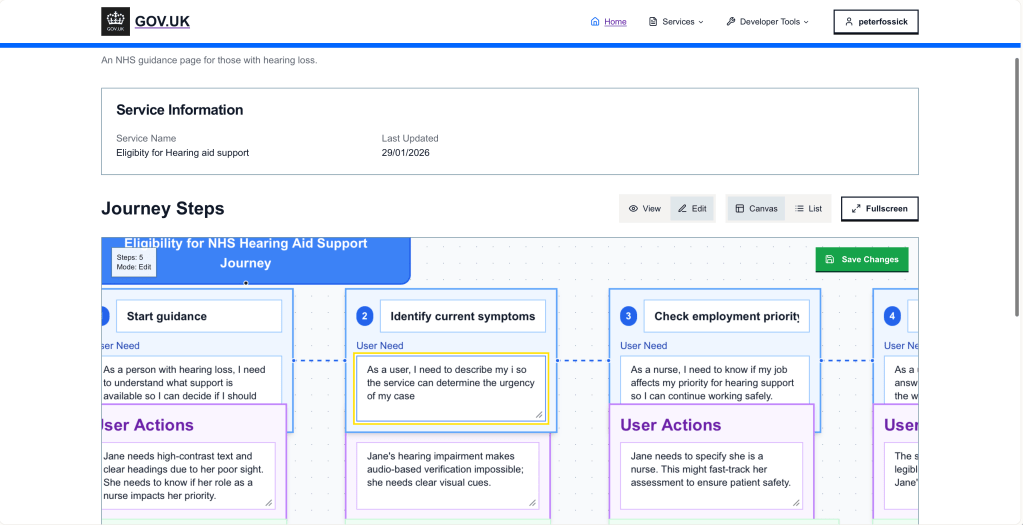
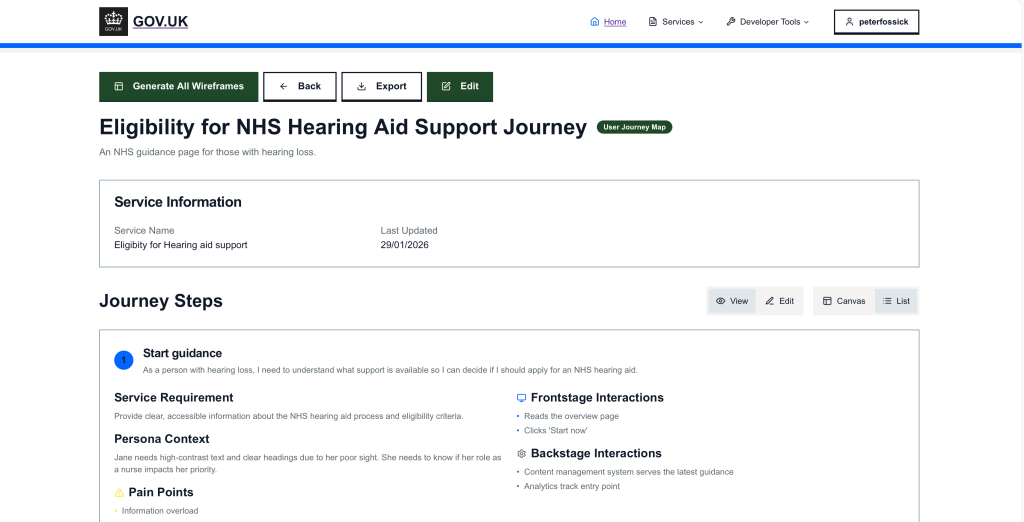
- Design Thinking Tools in-Built – Create or Generate and edit: Personas using data and research, create User Journey and Service Maps, and UI Designs
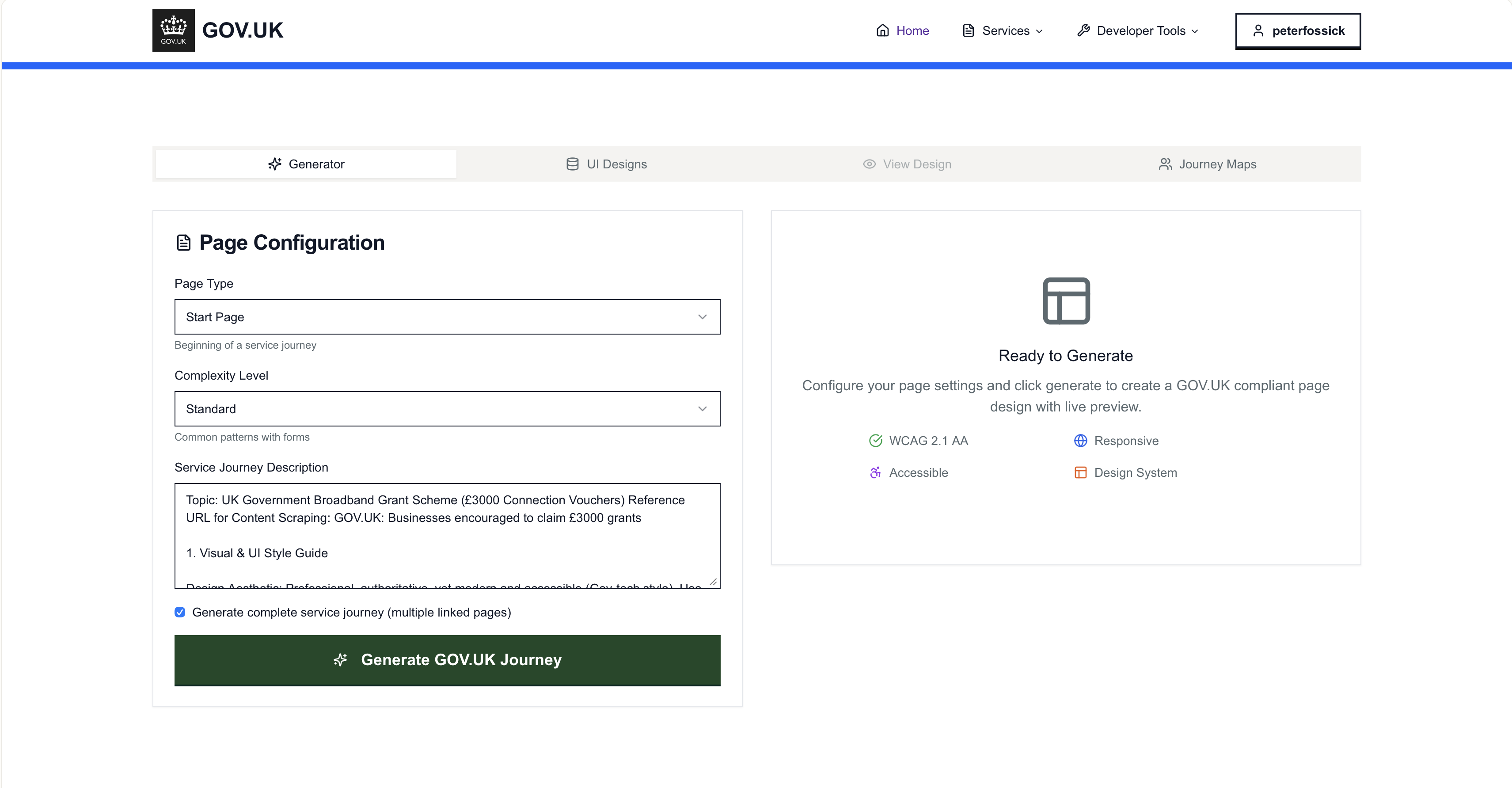
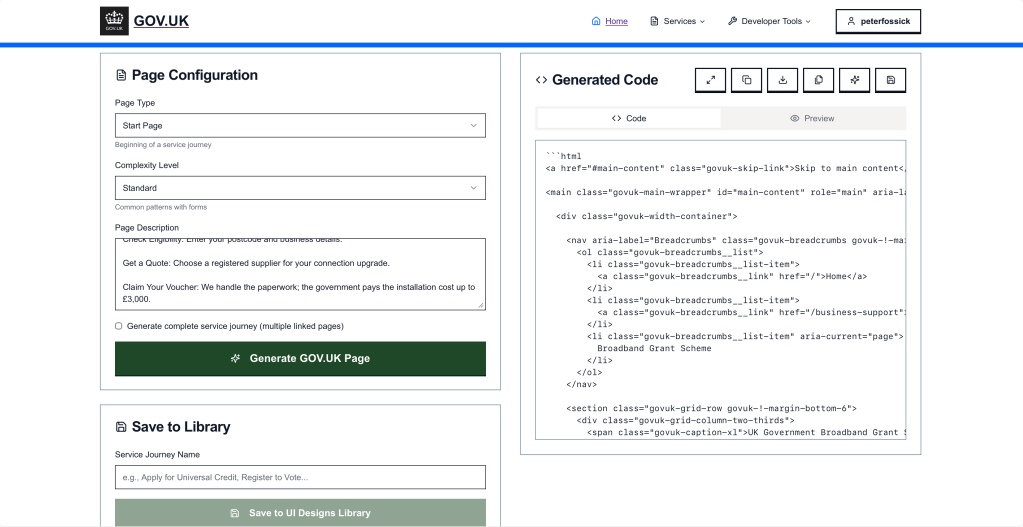
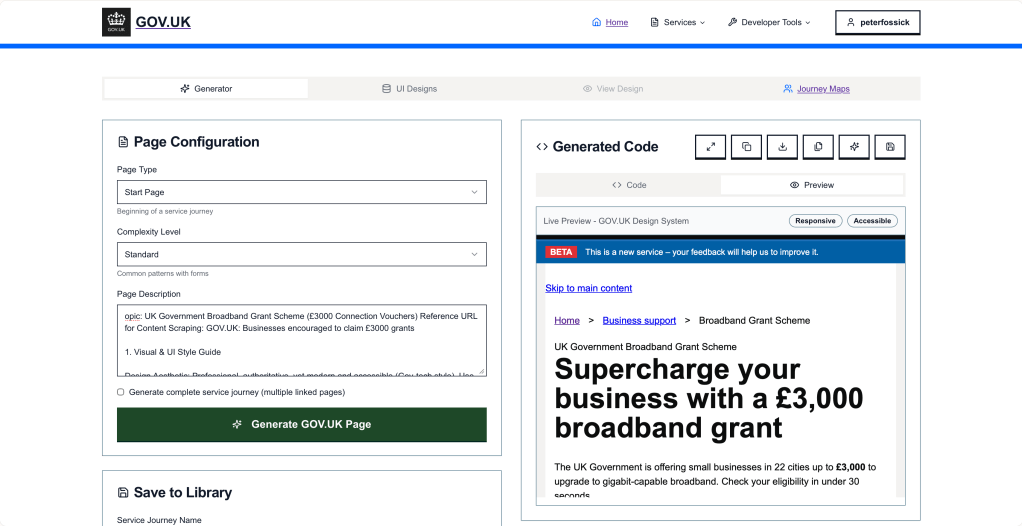
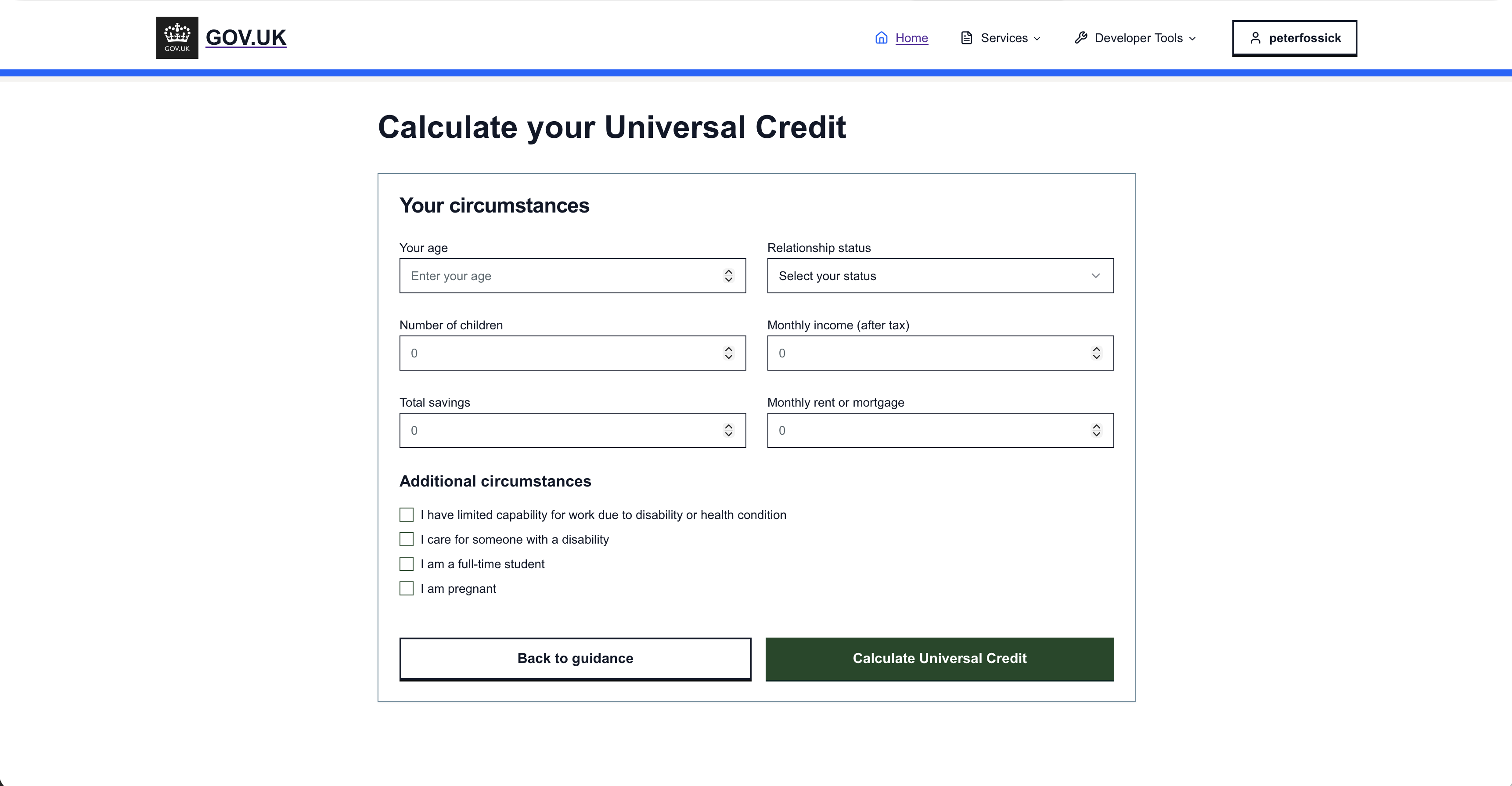
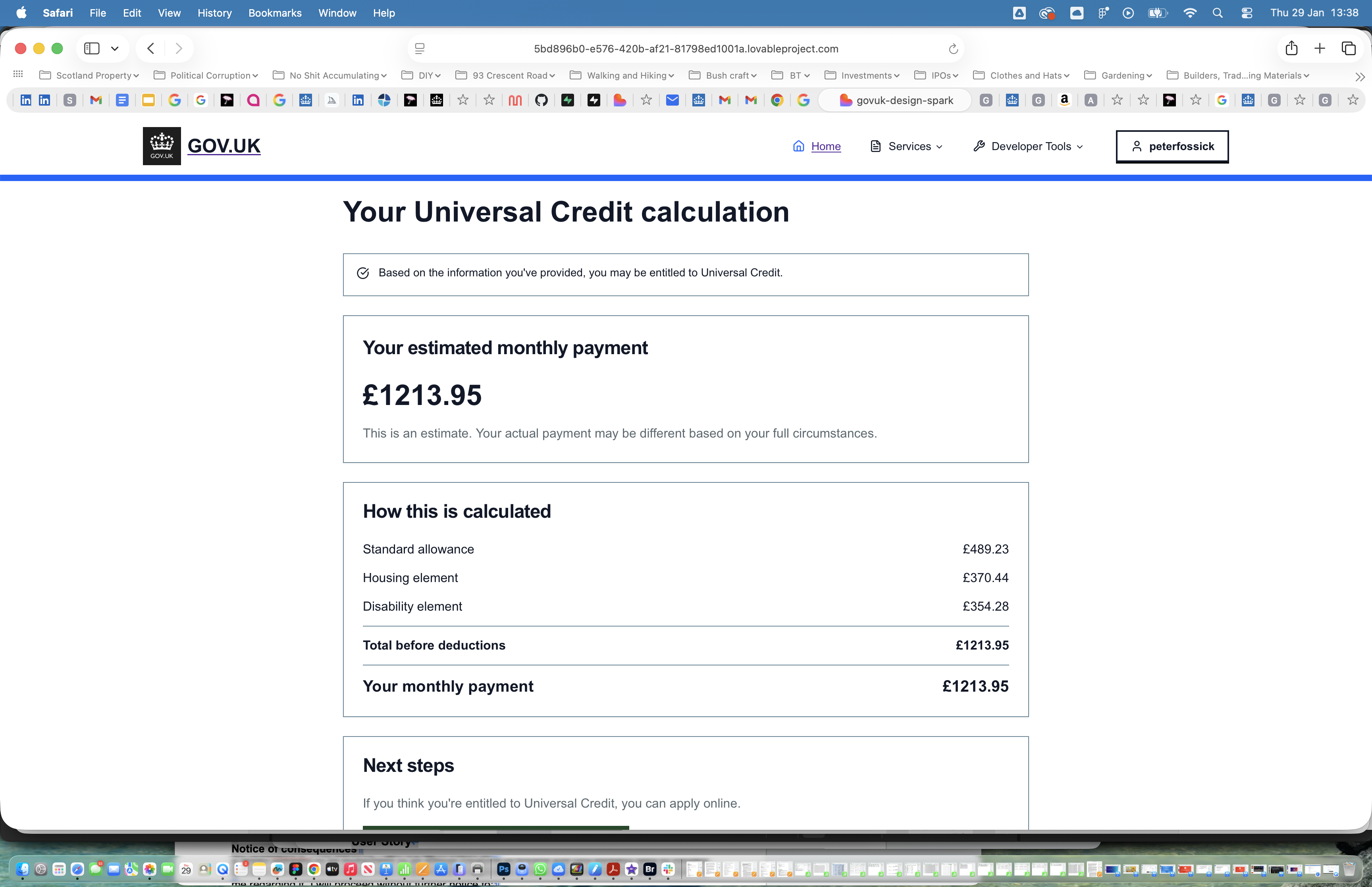
- GDS Design System UI Generator will create UI designs, fully coded in HTML, CSS and Javascript that follow the GDS Design System
2. Building AI Agents (The “Virtual Civil Servant”)
The goal is to move from a “search bar” to an “action bar.”
- Grounded RAG (Retrieval-Augmented Generation): Within DesignGenie, your agent is “grounded” only in your official government data. It won’t “hallucinate” or give advice based on external rumors; it only uses your uploaded PDFs, FAQs, and official databases.
- Actionable Workflows: Unlike basic chatbots, DesignGenie agents use Function Calling. For example, a “Permit Agent” doesn’t just tell you how to apply; it can check your address against a zoning database and start the application for you.
- Natural Language Interaction: Citizens can ask, “Can I build a fence in my backyard?” and the agent handles the logic of checking regulations and scheduling an inspection.
3. Governance & Security (The “Gov” Factor)
For government use, DesignGenie meets specific “Red Lines”:
- Data Residency: Ensures all citizen data stays within your country’s borders or specified sovereign clouds.
- Safety Filters: Built-in guardrails to prevent the AI from discussing politics, using biased language, or providing unauthorized legal advice.
- Transparency: Every answer the agent provides can include citations, showing exactly which government document the information came from.
The Agentic Tools
This agentic GenAI tool is designed to bridge the gap between complex government policy and user-friendly, GOV.UK-compliant digital services. It functions as an autonomous assistant for service teams, automating the generation of both the visual interface and the logical user journey.
1. Core Functionality: “Policy to Prototype”
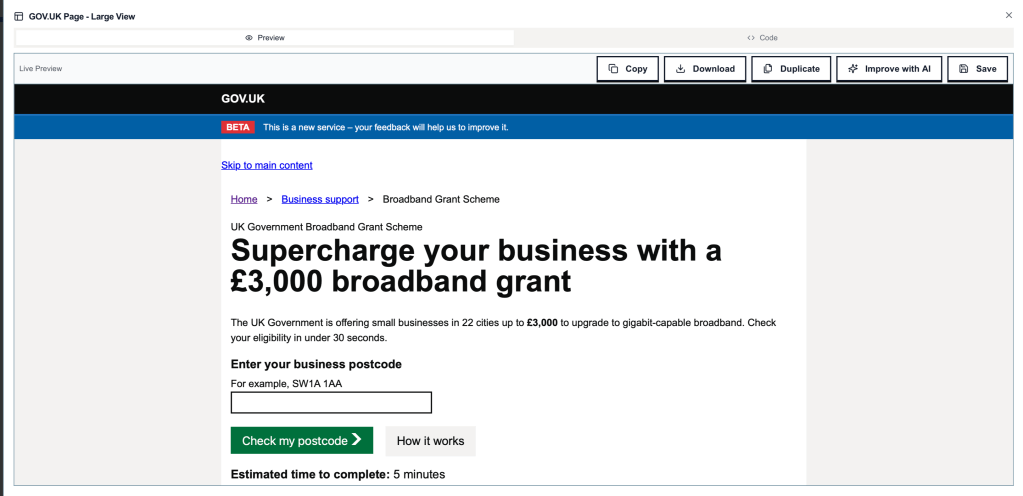
The tool operates by “scraping” or ingestion of official policy documents (like the broadband grant announcement) and translating that text into structured digital components.
- Content Generation: It uses Large Language Models (LLMs) to draft first-copy texts, accessible summaries, and plain English versions of complex legal or policy jargon.
- Journey Mapping: The “agentic” nature allows it to autonomously determine the best execution pathway. For example, it can identify necessary “branching” logic—such as redirecting a user to an “ineligible” page if they do not meet the geographic criteria for a grant.
2. Design System Alignment
Unlike generic AI image generators, this tool is strictly constrained by the GOV.UK Design System.
- Component Selection: It selects from established building blocks like Phase Banners, Task Lists, and Service Navigation components.
- Code-Ready Output: It can produce code snippets intended for the GOV.UK Prototype Kit, utilizing Nunjucks or HTML/CSS that mirrors the authentic government look and feel.
- Brand Refresh Compliance: It automatically incorporates updated brand assets, such as the refreshed 2025 crown logo and footer styles.
3. Agentic Behavior & Problem Solving
The tool is “agentic” because it doesn’t just follow a static template; it uses its capabilities to solve specific objectives:
- Autonomous Decision-Making: It can determine which fields are needed in a form (e.g., postcode, business size) based on the grant’s eligibility criteria.
- Interactive Refinement: Much like the GOV.UK Chat experiment, it can provide “check this answer” components to link AI-generated summaries back to official source guidance, reducing the risk of “hallucinations” or misinformation.
4. Human-in-the-Loop Governance
While the AI generates the initial layout and journey, government policy mandates strict human oversight.
- Review Stages: Service teams must evaluate the AI’s output for accessibility, security, and factual accuracy before any generated content goes live.
- Safety Guardrails: The tool is designed to exclude sensitive or personal data from its training prompts to maintain GDPR compliance.
Outputs
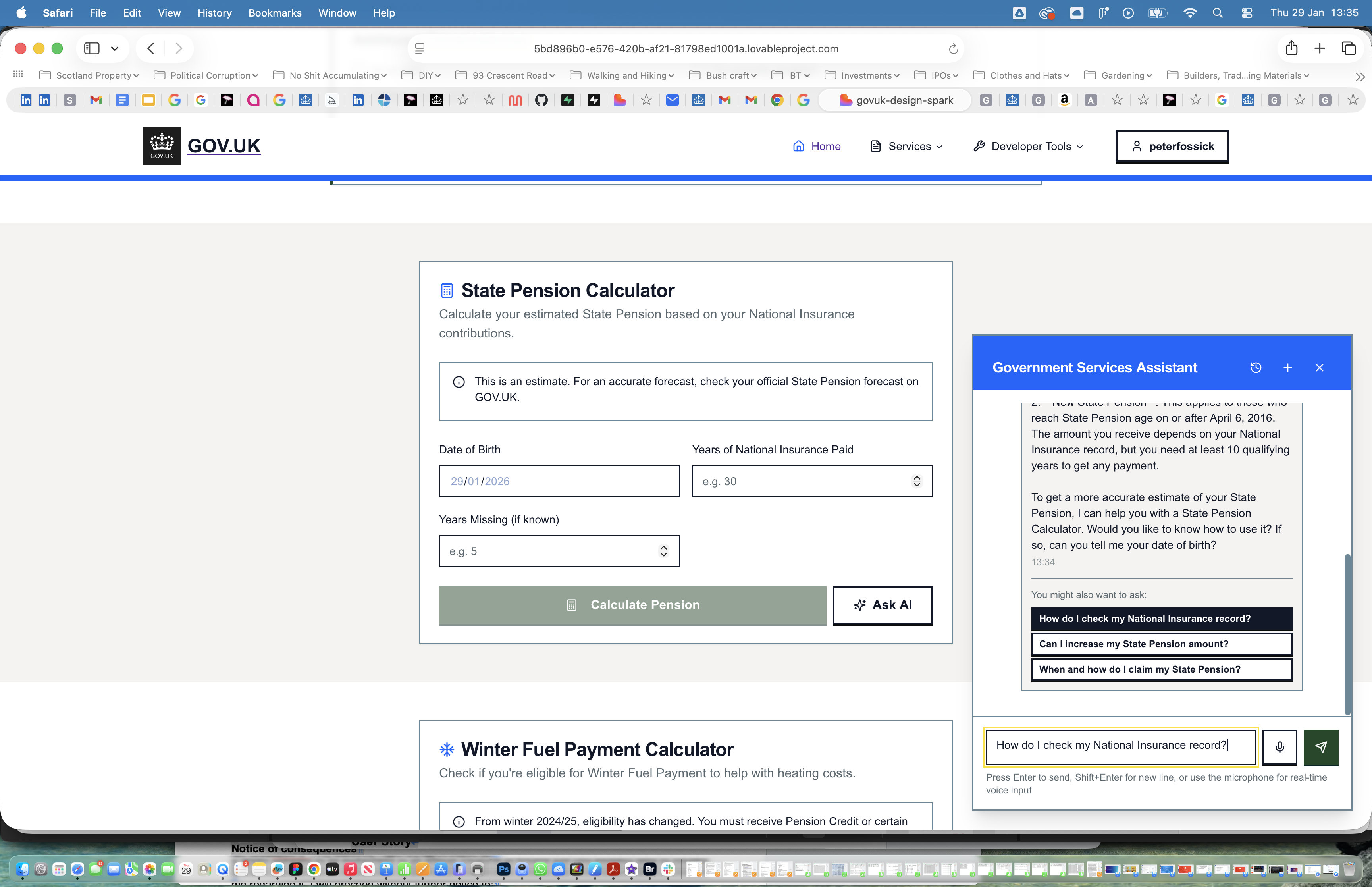
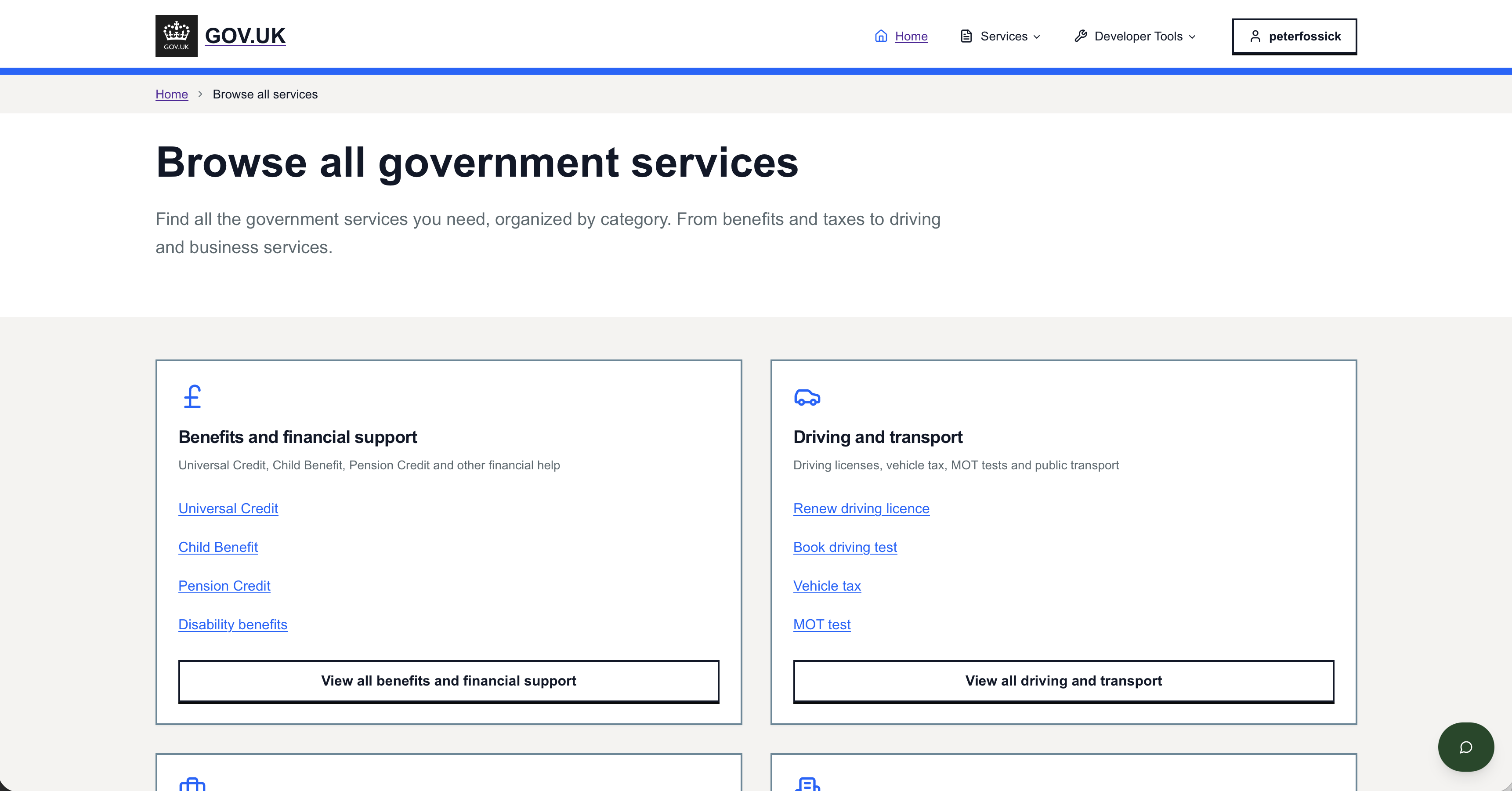
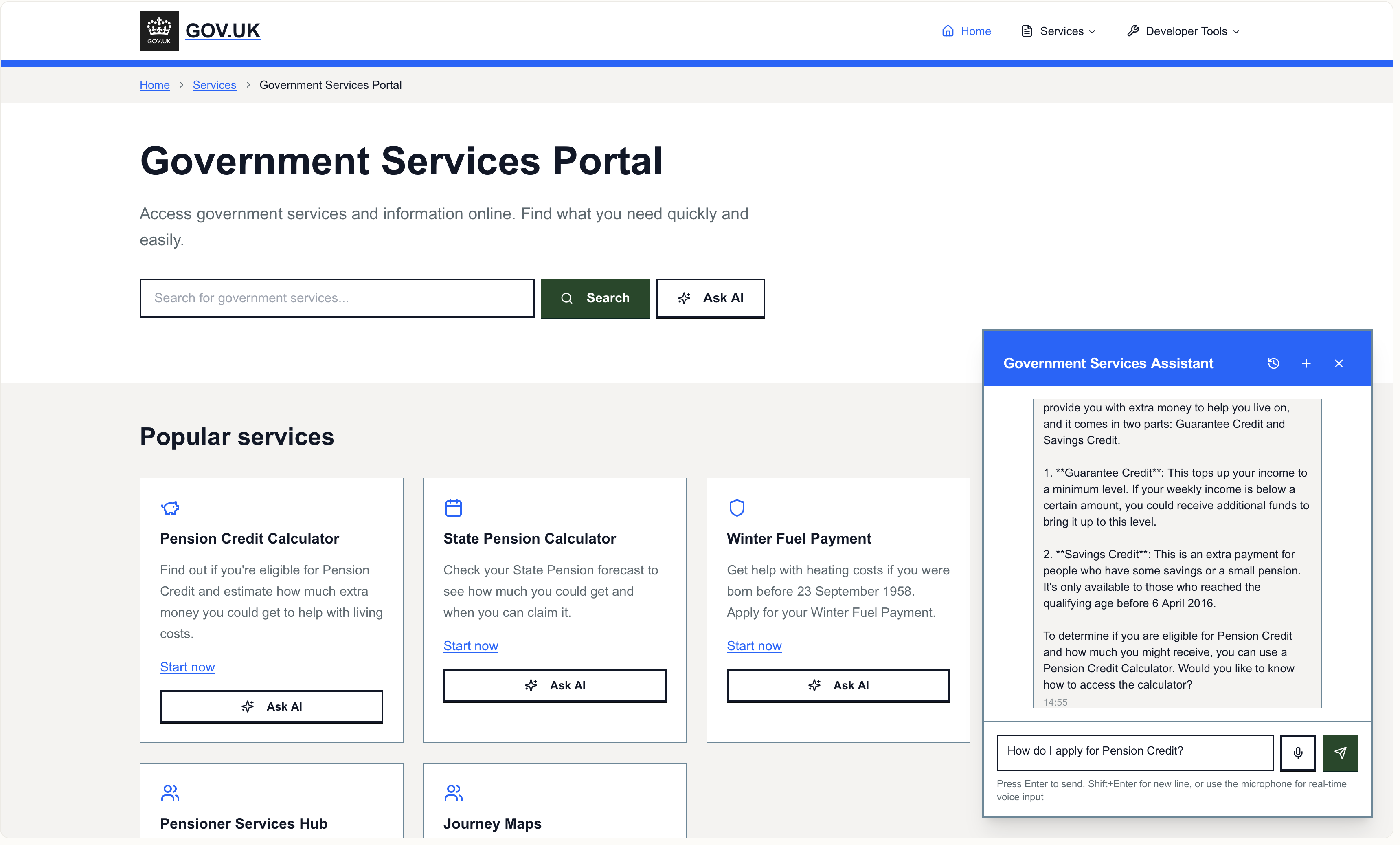
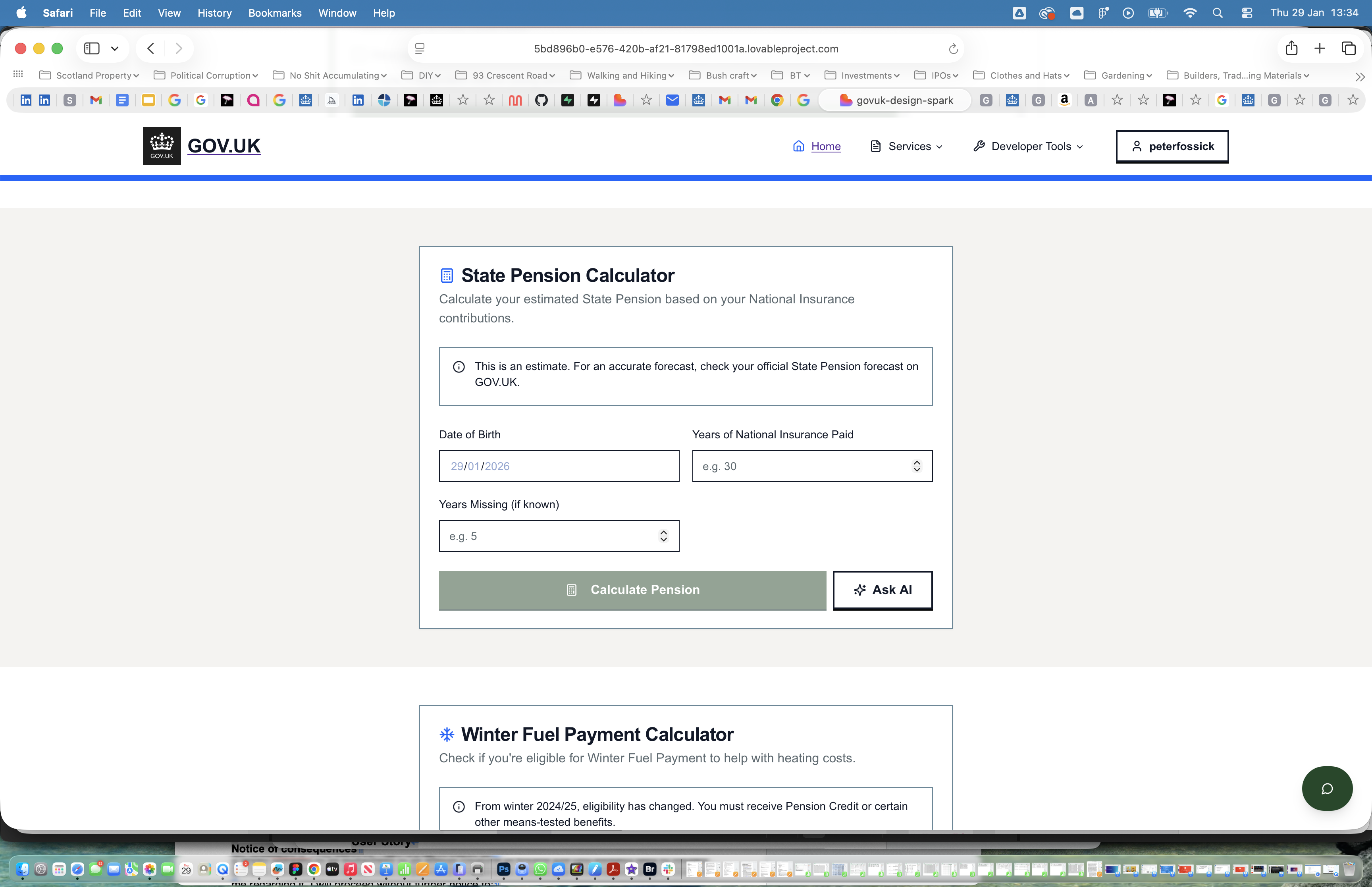
Here are some examples of what the tool can output
 Service Design | UX Designer | UI Designer | Digital Product Design | Digital Transformation | #DesignOPs #ReOps #UX #UI #Manchester #London #UK #EU #UAE
You must be logged in to post a comment.